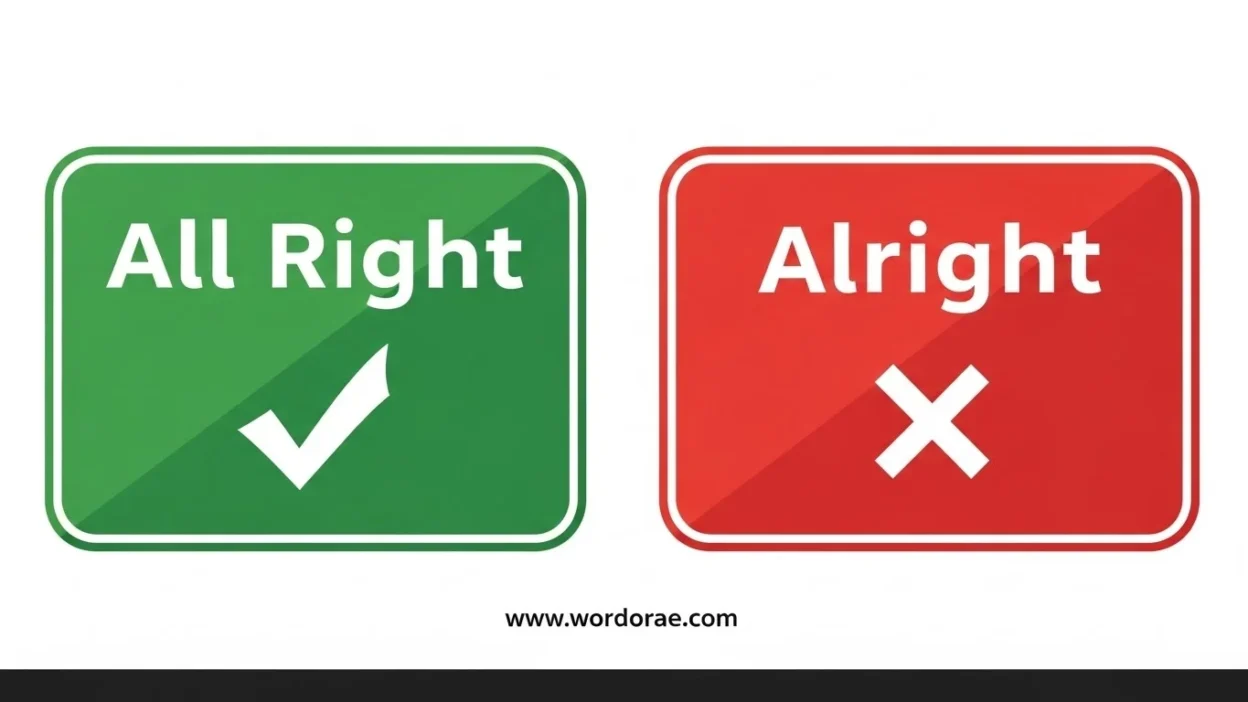
Quick answer first: “All right” is correct. “Alright” is informal and not recommended in standard writing.
I remember stopping mid-message and thinking, “Wait, is it all right or alright?” I’d seen alright everywhere tweets, comments, blogs but something felt off. A quick check confirmed it: all right is the proper form.
If you’re wondering about all right or alright, you’re not alone. They sound the same and mean the same, but only one is fully accepted. People often get confused in phrases like are you all right or alright or that’s all right or alright.
This little detail matters more than you think. Using the wrong form can make writing look sloppy or unprofessional.
In this guide, I’ll explain the difference, why it happens, and how to always get it right.
All Right or Alright : Quick Answer
All right is the correct and accepted spelling in standard English.
Alright is informal and often discouraged.
Examples:
✅ Everything will be all right.
⚠️ Everything will be alright. (informal)
If you’re asking which is right all right or alright, the safe answer is always all right.
The Origin of All Right or Alright
All right comes from two separate words:
- all (completely)
- right (correct or fine)
Over time, people combined them into alright, similar to how language shortened other phrases. However, unlike already, alright never became fully accepted.
According to standard English grammar rules and dictionary definitions, all right remains the preferred form in writing.
British English vs American English Usage
There is no real difference between regions.
| English Variant | Preferred Form |
| American English | all right |
| British English | all right |
| Australian English | all right |
| Canadian English | all right |
Both all right or alright US and all right or alright UK follow the same rule: all right is standard.
Which Spelling Should You Use?
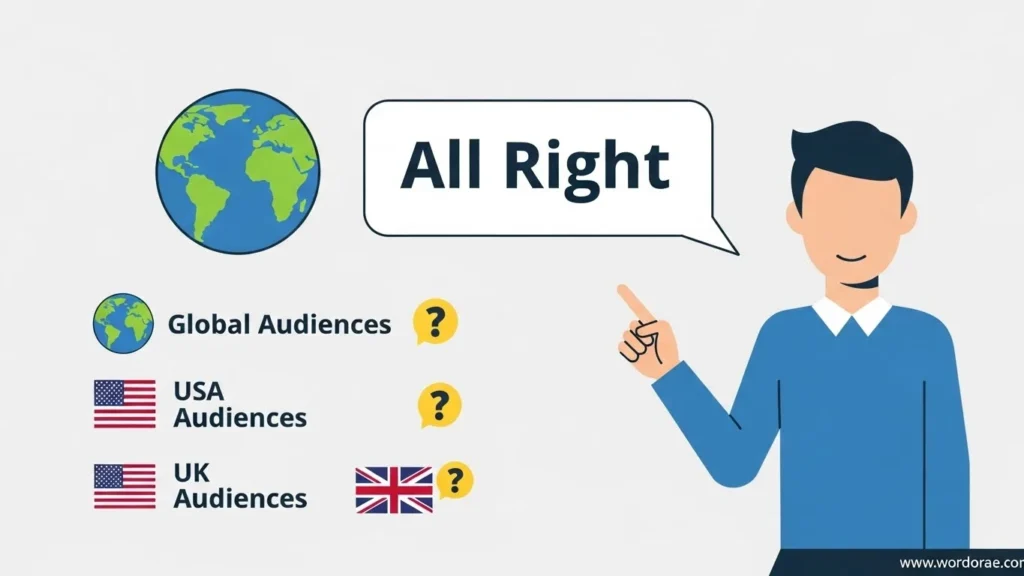
If you’re wondering should you use all right or alright, here’s simple advice:
- Formal writing (emails, school, legal, SEO): all right
- Professional messages: all right
- Casual text or dialogue: alright (optional)
If you’re unsure whether it would be all right or alright, choose all right.
Common Mistakes with All Right or Alright
❌ The report looks alright.
✅ The report looks all right.
❌ Do you feel alright today?
✅ Do you feel all right today?
These mistakes happen because people assume shorter spellings are correct.
All Right or Alright in Everyday Examples
Emails:
Would it be all right to reschedule the meeting?
News:
Officials confirmed everything is all right.
Social Media:
It’s alright, I’ll handle it 👍 (casual)
Formal Writing:
The system is functioning all right after the update.
All Right or Alright : Google Trends & Usage Data
Search data shows:
- “All right” dominates in books, news, and professional writing
- “Alright” appears mostly in casual searches
- Google favors all right for authoritative content
Users search all right or alright meaning and all right or alright difference because they want certainty and clarity improves both trust and SEO.
Comparison Table: All Right vs Alright
| Form | Correct? | Usage |
| all right | ✅ Yes | Formal & informal |
| alright | ⚠️ Informal | Casual only |
| allright | ❌ No | Incorrect |
FAQs
1. Is it all right or alright?
All right is correct.
2. Are you all right or alright?
“All right” is preferred.
3. Which is correct all right or alright?
All right.
4. Is “alright” accepted in American English?
Informally, yes.
5. Is “alright” okay in British English?
Still informal.
6. Should SEO content be used all right or alright?
All right.
7. Is “that’s all right or alright” correct?
“That’s all right” is standard.
Conclusion
The confusion between all right or alright is common, but the rule is simple. All right is the correct, professional, and universally accepted form. Alright may appear often online, but it remains informal and best avoided in serious writing.
If you want your writing to sound clear, confident, and credible whether for emails, schoolwork, or SEO stick with all right. Once you know the rule, you’ll never hesitate again.
Remember:
Two words = always right.

I’m Helena Marwick, a grammar-focused writer at Wordorae.com, where I help readers understand confusing English words and usage clearly.
I specialize in making grammar simple, accurate, and easy to apply in everyday writing.